
Can an Old Apartment Intercom Be Upgraded to Video Without Running New Cable?
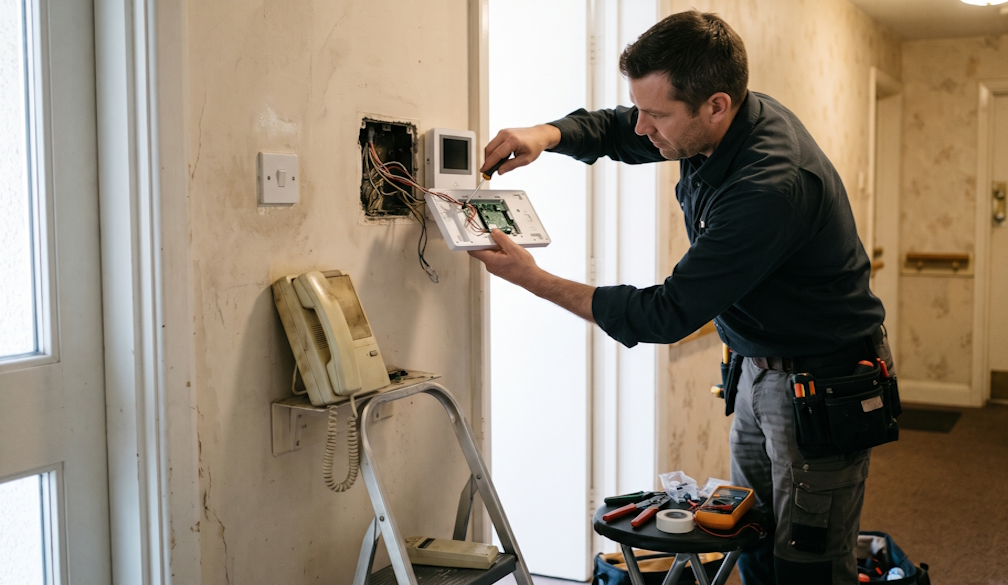
Walk into many older unit blocks around Newcastle and you will still find the same intercom that was installed decades ago. A panel of buttons at the front door, a beige handset on the wall of each unit, and audio that crackles just enough to make every visitor sound like they are calling from a tunnel.
Residents increasingly want to see who is at the door, answer from their phone or let in deliveries when they are not home. The big question for owners and strata committees is whether upgrading to a video intercom means tearing up walls and running new cable to every unit.
In many buildings, it does not.
How older intercom systems are wired
Older apartment intercoms were typically built for audio only. Depending on the age and brand, each unit's handset might be connected using a few wires, or the building might use a multi-core cable running through risers and ceiling spaces to every apartment.
Some systems connect each unit back to the front entry panel individually. Others use a shared cable that runs past each unit in turn. The layout matters a great deal when it comes to upgrading.
Two-wire video systems changed the picture
Many modern video intercom systems are designed to run on just two wires. These systems send power, audio, video and door release signals along a single pair of conductors to each unit.
That means if your building already has a working pair of wires running to each apartment, there is a good chance a modern video system can use them. Instead of cutting into walls and ceilings throughout the building, the old handsets are replaced with video monitors and the entry panel is upgraded to a camera station.
For many strata buildings, reusing existing cabling is the difference between a manageable project and a major renovation.
When the existing cabling won't do
Reusing old cable is not always possible. Wiring that has been damaged, corroded, poorly joined, or partly replaced over the years can cause problems for a modern system. Video signals are less forgiving than audio, and a cable that carried crackly audio for decades may not carry a clear picture.
In some buildings, the original cabling is not documented, units have been renovated with wiring altered, or the cable runs are simply too long or in poor condition. An inspection and testing of the existing cable is the only reliable way to know.
Sometimes a hybrid approach works, reusing cable where it tests well and replacing it only in problem sections.
What gets replaced in a typical upgrade
In most apartment intercom upgrades, the front entry panel is replaced with a weather-resistant video panel with buttons or a keypad for each unit. Each apartment gets a new monitor, and a new power supply and control equipment are installed in a communications cupboard or riser.
The door release usually stays connected to the existing electric strike or lock on the front door, though older strikes are often replaced at the same time. Many systems also allow residents to answer calls and open the door from a smartphone app.
Strata approval and common property
In most apartment buildings, the front entry panel, common area cabling and the door hardware are common property. That means changes need approval from the owners corporation, usually through the strata committee or a general meeting.
A clear proposal helps. Committees usually want to know what will be replaced, whether existing cabling will be reused, how long each unit will be without a working intercom, and how future maintenance will be handled.
Individual owners can sometimes upgrade the handset in their own unit, but only if the new device is compatible with the building's system. Mixing brands rarely works.
Single homes and duplexes
The same principle applies to houses and duplexes. If an older audio intercom is already wired between the gate and the house, there is often an existing cable that can be reused for a two-wire video system. That can make an upgrade much simpler than expected.
Houses with gates, long driveways or detached garages may also want gate release and remote access built in at the same time.
Questions worth asking before you commit
Ask whether the existing cable has been tested, and what happens if some units fail the test. Ask whether the system allows phone access and whether residents need to pay for an app or subscription. Ask about expansion, so new units, extra entry points or a car park gate can be added later.
Also ask how long the building will be without intercom access during changeover, and whether the work can be staged.
Finally, ask about parts and support. Choosing a well-established brand with local supply matters in a shared building, because a single failed monitor or entry panel years from now should be a simple replacement, not the start of another full upgrade. A system that is easy to service is worth more to an owners corporation than one with the longest feature list.
Getting it done properly
Intercom systems combine electrical power, low-voltage cabling and door hardware, and they need careful planning in a shared building. Upgrading an apartment intercom system is a job for someone who can test the existing cabling, recommend a compatible system and coordinate with the strata committee and residents.
For many older Newcastle unit blocks, the result is a big improvement without the disruption people expect. Clear video, phone access and reliable door release can often arrive through the same wires that have been sitting in the walls for decades.